
Top Photography Spots in Marlborough
Marlborough is famous for its world class Sauvignon Blanc, but for landscape photographers, this region is a goldmine of golden hills, sheltered drowned valleys, and rugged coastlines. Beyond the endless rows of vineyards, lie serene mirror like lagoons, snow dusted alpine peaks, and vibrant historic boat sheds waiting to be captured. Whether you are hunting for dramatic sunrises, long exposures or perfect golden hour light, this guide reveals the best photography spots in Marlborough, complete with camera settings, ideal light windows, and location tips.
Queen Charlotte Sound – Iconic Coastal Boat Sheds
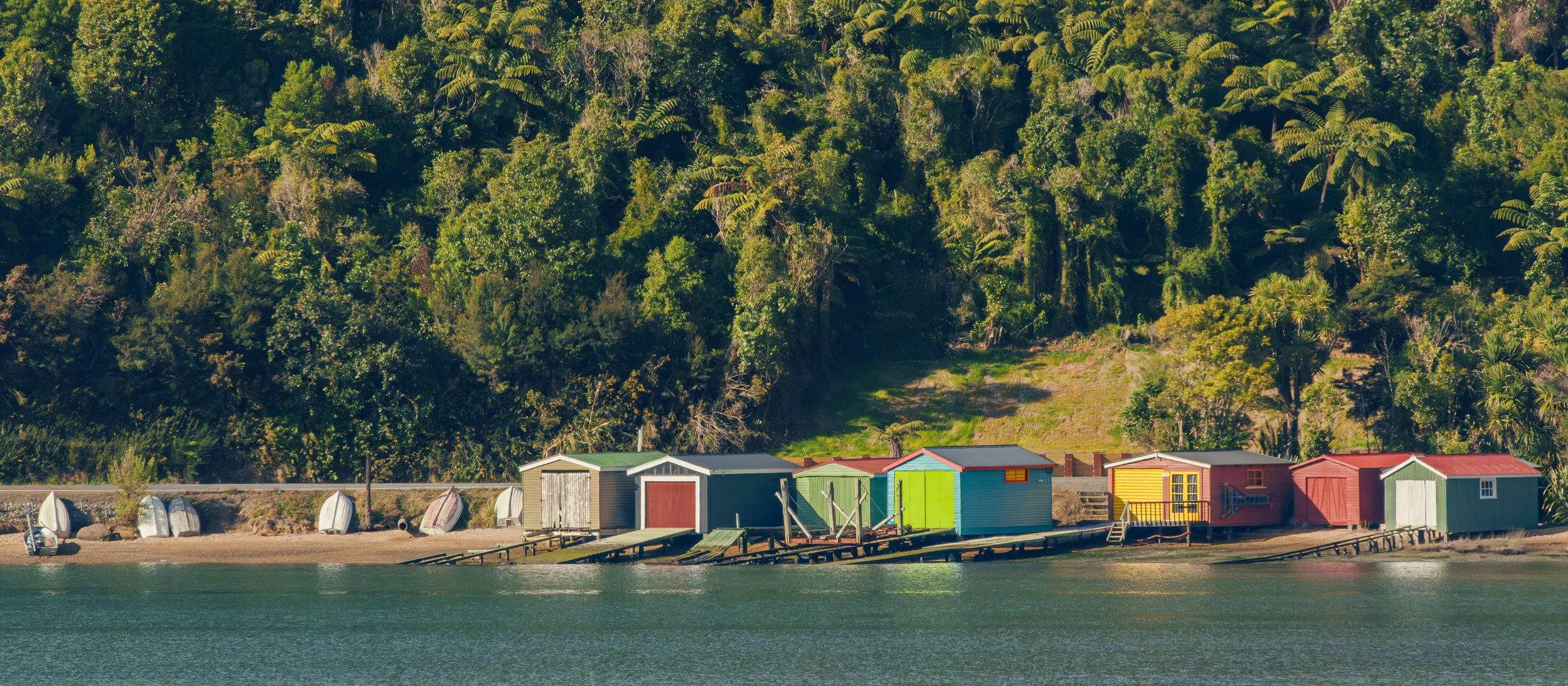
Iconic Boat Sheds near the Grove Arm Jetty
Queen Charlotte Sound/Tōtaranui is a coastal paradise, rich with island sanctuaries where native birdlife thrives, pristine waters teeming with dolphins, penguins, orca, stingrays and all manner of seabirds waiting to be discovered, and beautiful beaches bordered by fragrant native bush. Queen Charlotte Drive is a winding coastal road that connects Picton and Havelock through the beautiful Marlborough Sounds. I find it’s best to drive from Havelock to Picton, as all the lookout vantage points are on your left, making it much easier to pull over and enjoy the views. There are plenty of opportunities for photos along the way, one of my favourite spots is the iconic boat sheds near the Grove Arm Jetty. I’ve photographed those sheds many times over the last six years, but recently the pine forests that formed their backdrop were harvested, leaving the background looking quite messy. This winter I went searching for a new composition, and this photo was taken late morning from one of the lookouts on Anakiwa Road using my Sony 70-350mm telephoto lens. Once the spring equinox has passed and the winds have calmed, I think this composition will work very well on a still early morning, with clear reflections in the water around the boat sheds. Further along Queen Charlotte Drive, both Momorangi Bay and Ngākuta Bay are well worth a leisurely stop on your scenic drive to Picton.
Wairau Valley – Symmetrical Vineyard Rows & Mountain Frames
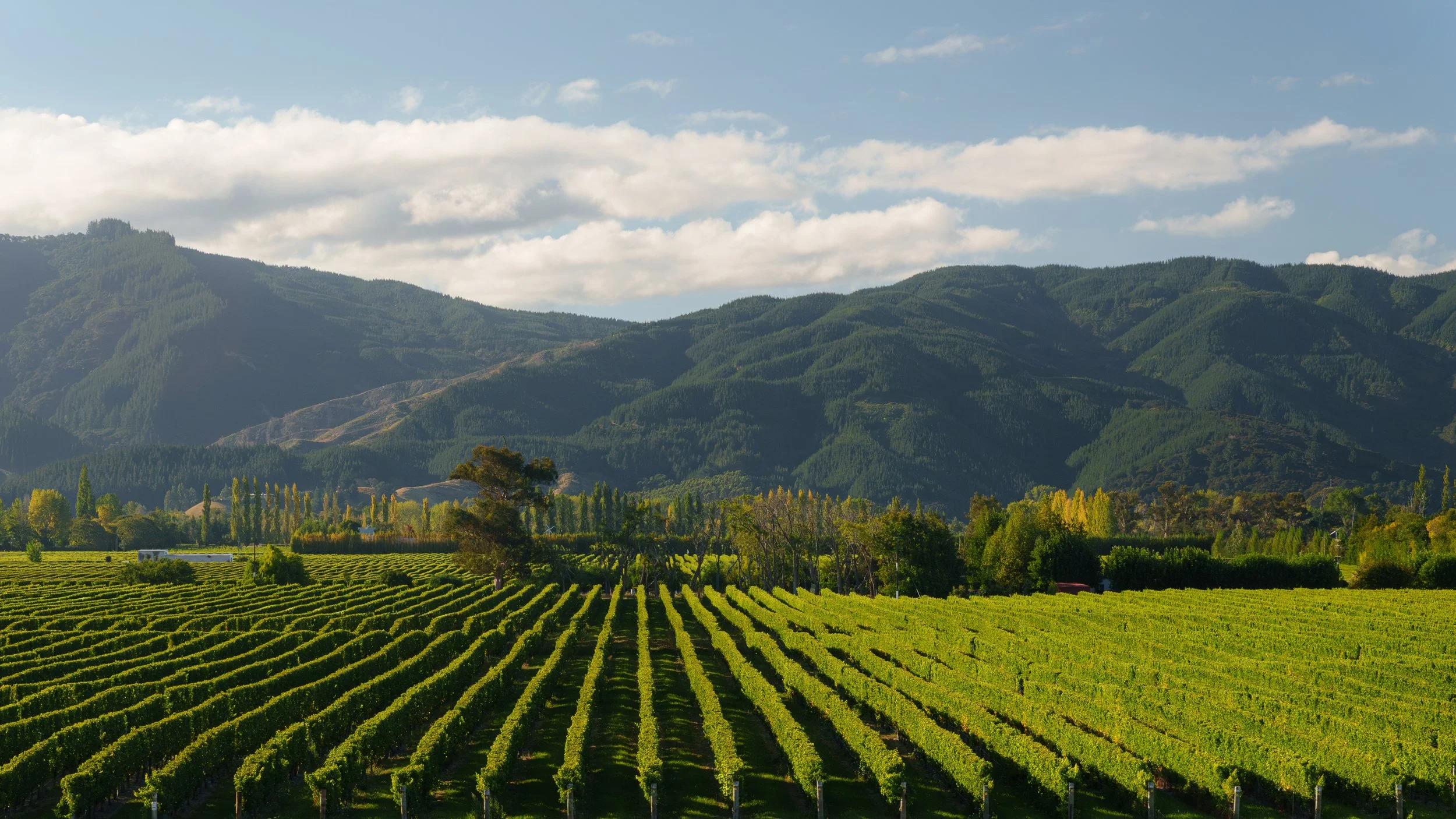
Symmetrical Vineyard Rows
The Wairau Valley in Marlborough is New Zealand's most historically important and largest wine sub region, world famous for pioneering the country's iconic, fruit forward Sauvignon Blanc and for its sun drenched vineyards. The Wairau Valley in Marlborough is framed primarily by the Richmond Range to the north and west, with a chain of high inland hills and the distant Inland Kaikōura Range to the south and east. Symmetrical vineyard rows set against these mountain backdrops create excellent compositions. I prefer to shoot from a higher vantage point, like from a stop bank or, as in the accompanying photo, from a winery catwalk, because it gives a stronger sense of scale and reveals more landscape detail, that is my personal preference. The best times to photograph the vineyards are varied: winter after a weather event when snow crowns the ranges, throughout the growing season during the golden hour in the first or last hour of sunlight, under stormy skies that add drama, and in the magical autumn colours once the grapes have been harvested. One of Marlborough’s lesser known characteristics is its wind, so to keep images sharp I tend to use faster shutter speeds and will commonly raise my ISO up to around 800, that way I end up with consistently usable images, especially when I’m creating high quality prints for the wall.
Awatere River Valley – Braided Rivers & Eroded Bluffs
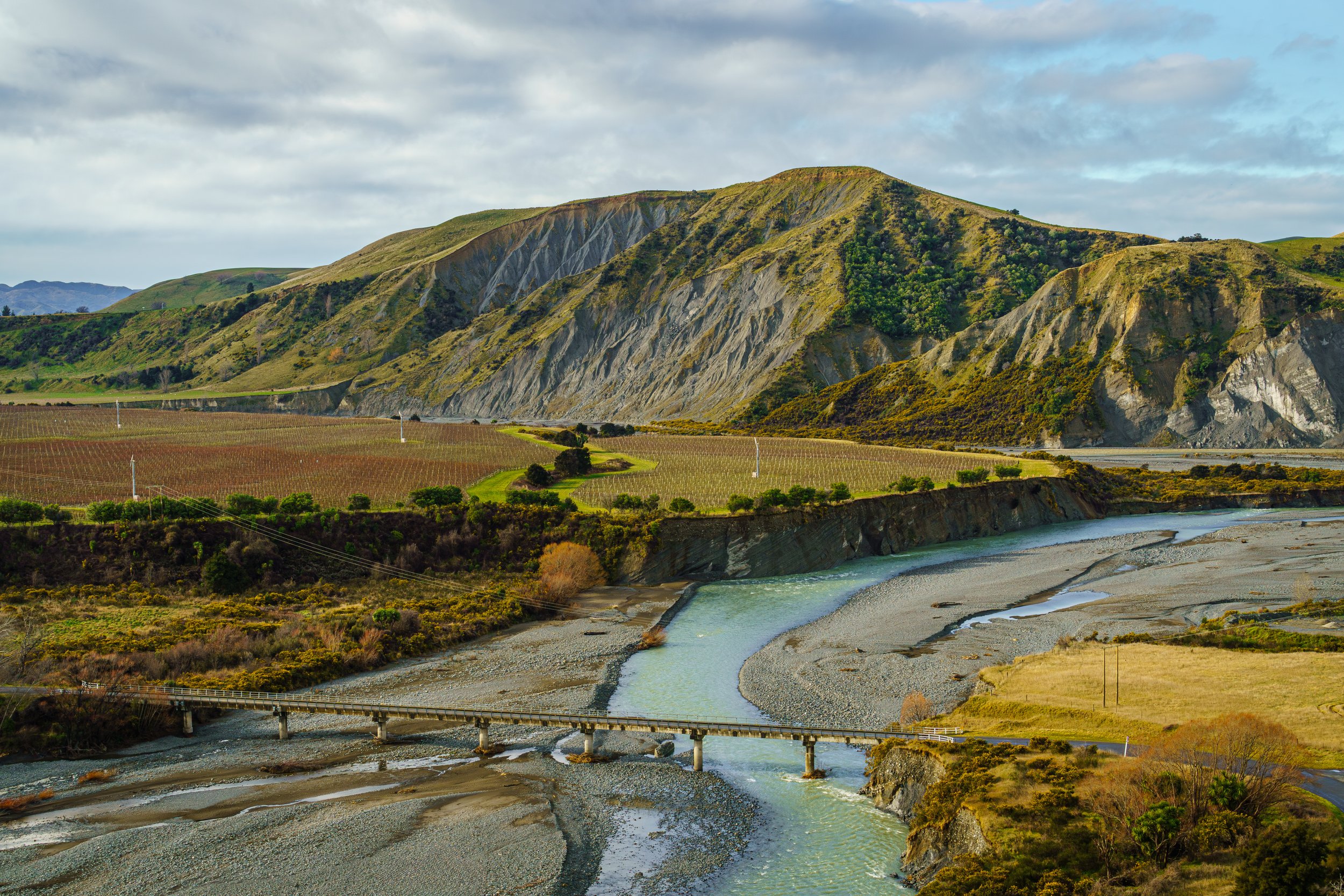
The Awatere River
The Awatere River stretches over 110 kilometres from the mountains southeast of Molesworth to the sea between Clifford Bay and Cloudy Bay, winding through diverse landscapes along its course. To the south rise the Inland Kaikōura Mountains, dominated by the highest peak, Mt. Tapuae-O-Uenuku (2885 m), while to the west and north several ranges of rugged hills and peaks between about 1600–1800 m, including the Black Birch Range. This Black Birch Range separates the Awatere Valley in the south from the neighbouring Wairau and Waihopai valleys to the north. For most of its length the valley floor remains relatively narrow, flanked by intermittent river terraces that mark past changes in the river’s flow and level. The accompanying photo looks out over the Awatere River, its landscape defined by braided channels and eroded bluffs. To reach this spot, turn off SH1 at Dashwood just north of Seddon and follow Awatere Road for roughly 25 km before turning onto Medway Road. Cross the Awatere River on the Medway Bridge and, as you climb the hill, you’ll find a lookout on the left where the view opens up. The image was captured on a winter afternoon at about 3 pm in the afternoon, with temperatures near three degrees and a strong wind. Perched up high gives a strong sense of scale, the shot was taken handheld using a 35mm prime lens. This is a great lookout to revisit throughout the year to capture the ever changing seasons and the subtle shifts in light and colour.
Tapuae-o-Uenuku & Kaikōura Ranges – Snow-Capped Alpine Peaks
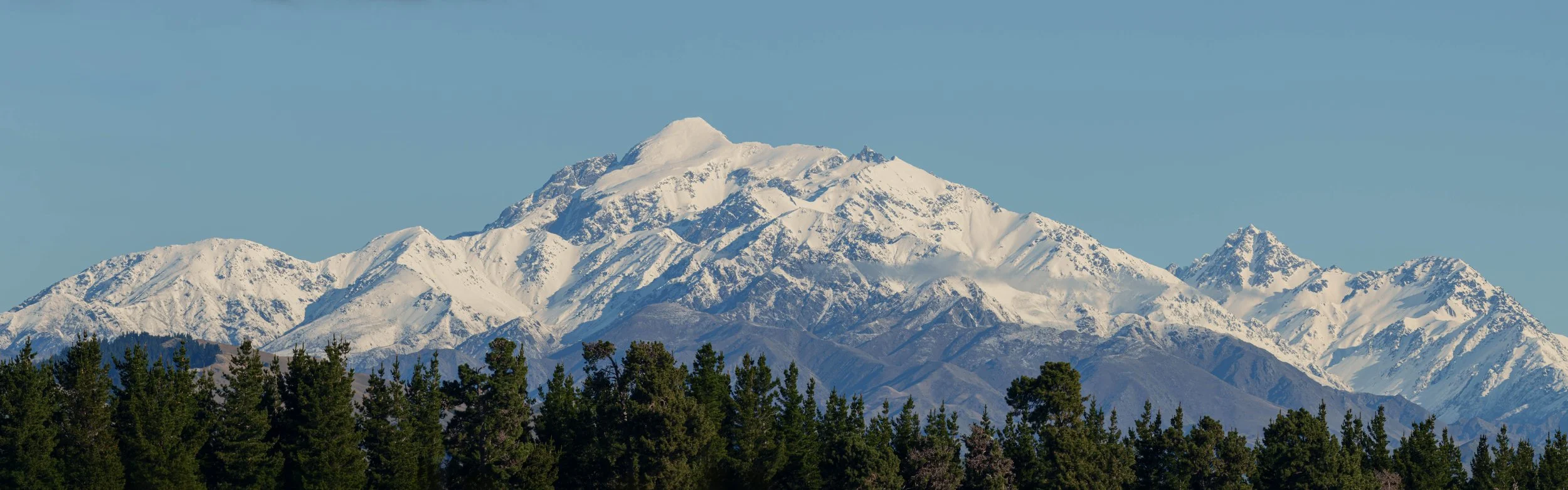
Snow dusted Tapuae‑o‑Uenuku
Tapuae‑o‑Uenuku, the highest peak in New Zealand outside the Southern Alps, towers at 2,885 meters in the Inland Kaikōura Range. Dominating the Inland Kaikōura Range, Tapuae‑o‑Uenuku soars above the valleys of the Waiau Toa / Clarence and Awatere Rivers and is affectionately known locally as Tappy. There are many excellent vantage points across Marlborough for photographing the mountain, but late autumn, winter, and early spring (May–October) provide the most photogenic conditions when heavy snow blankets the slopes. Weather in these months can be quite fickle, yet the snow creates maximum contrast that makes the peak stand out. Sunrise and sunset are especially rewarding times to shoot, as the low angle light sculpts the rugged ridge lines and steep faces, often bathing the summit in rich pink and orange hues. The accompanying photo was taken along Awatere Valley Road as a five shot vertical panorama blended in Adobe Camera Raw. I used my Sony 70–350mm telephoto lens mounted on a tripod, and chose to exclude any vineyard foreground because the irregular rows would compete with the mountain’s visual dominance.
Grovetown Lagoon – Golden Hour & Sunset Water Reflections

Golden Hour at Grovetown Lagoon
In Marlborough we enjoy wonderful golden hour and sunset displays throughout the year. The challenge where I live is that power pylons cut through the landscape and a local fish factory’s industrial building sits to the west of my property, which makes it difficult to capture clean golden hour and sunset photos from home. For that reason I usually plan my golden hour and sunset shoots in locations where I can find great compositions unspoiled by industrial intrusions. Over the winter I planned a golden hour and sunset photoshoot with another local photographer at Grovetown Lagoon, which is located just minutes from Blenheim. Grovetown Lagoon is an oxbow wetland and offers the ultimate sanctuary for capturing tranquil golden hour reflections. Late on a winter’s afternoon we headed out to Grovetown Lagoon as golden hour began at approximately 4:20 p.m. and sunset was around 5:20 p.m. We agreed the best vantage point for shooting golden hour and sunset would be from the bird hide on the eastern end, closest to the Wairau Rowing Club. The tall poplar tree becomes a perfect focal point, giving photographers a clean vertical subject mirrored in the lagoon’s glassy surface. There are many rules in photography, and one I often follow is to place your subject along the rule of thirds. I tried that by positioning the poplar on the thirds grid, but it didn’t feel right because there was a lot of empty space to the left of the tree. Changing the grid on my camera’s LCD to quarters and placing the poplar tree on a quarter line pushed it further left and produced a stronger, more balanced composition. This is a popular spot and is ideal for landscape photographers looking to capture colour, symmetry, and calm evening light in a single frame.
Final Thoughts: Planning Your Marlborough Photo Trip
Marlborough proves that New Zealand’s top wine region is equally world class behind the camera lens. From the mirror reflections of Grovetown Lagoon to the wild heights of the inland Kaikōura ranges, this landscape offers an incredible variety of textures and light for photographers willing to look beyond the vines. Pack your camera bag, time your outings for the golden hour windows, and set off to capture the wild, tranquil beauty of Marlborough for yourself. If you're looking to capture the region from the water, check out my experience on A Scenic Summer Boat Trip Through Marlborough Sounds for more coastal shooting inspiration."